

Kai
Kai are healthy, and have a strong whakapapa, are safe to eat, locally abundant and can be harvested according to our traditional practices.
1 of 9 B+Economy
Communities are prosperous, as shown by high levels of employment, housing affordability, gross domestic product and income equality.
2 of 9 *Sites of Significance
Our sites of significance are forever recognised and celebrated as areas of historical and cultural importance and safe for us to interact with and support a healthy Awa.
Due to a lack of finer-scale information, there was insufficient information to score Sites of Significance.
3 of 9 CExperience
We have a flourishing and nurturing connection with the rivers and we are empowered to pursue and maintain our interaction.
4 of 9 CWater Security
Our land use practices and land development support communities and taonga species having access to life-sustaining supplies of water.
5 of 9 C+Ecological Integrity
Aquatic life has access to healthy habitats protected from adverse effects due to land use and contaminants. Aquatic life has access to healthy habitats protected from adverse effects due to land use.
6 of 9 CEffort
Communities, businesses and individuals are engaged in comprehensive contaminant control and rehabilitation to achieve the Vision and Strategy.
7 of 9 C-Water Quality
Land use and development practices support water bodies that have water that is safe to physically interact with.
8 of 9 C+Overall Grade
As of 2016, the overall grade is C+, as only some of the Vision & Strategy aspirations for the Waikato River are being met.
9 of 9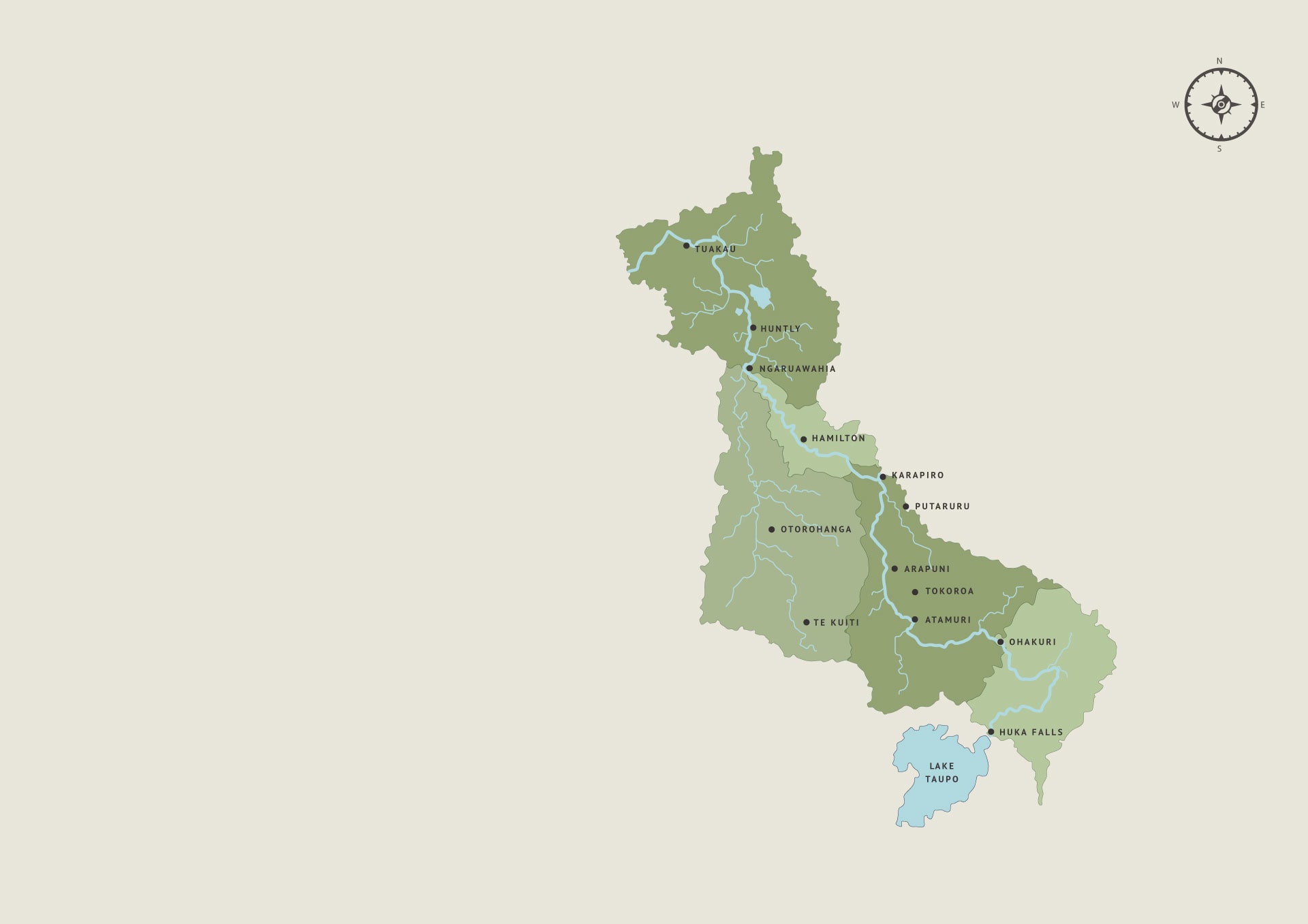



Shallow riverine lakes have algal blooms, very poor clarity, pest fish, have lost submerged plants, and kai species are degraded. Rehabilitation plans initiated.
1 of 9
Lake Rotoroa’s ecological integrity and water quality have degraded.
2 of 9




The water clarity degrades swimming all year, but bug-level safe in the bathing season; diverse native fish (whitebait & eel fishing), but pest fish are prevalent; extensive drainage and flood control degrade ecological integrity; large wetlands present.
5 of 9 Waipā

Water quality and clarity are unsafe for swimming in the mainstem and many tributaries; many lakes have good access and riparian vegetation but low water quality; diverse kai species in tributaries.
6 of 9 Mid Waikato

Water quality is safe for swimming only in the mainstem in bathing season; macroinvertebrate indicators reflect degraded conditions; good access and signage on mainstem and lake, efforts underway to improve fish passage.
7 of 9 Ohakuri To Karapiro

Water quality is safe for swimming in the mainstem but not in most tributaries; six hydrolakes with good access support recreation; cumulative effects of farm inputs are increasing; a high degree of groundwater allocation; eels are manually transferred from below Karapiro; a high level of riparian fencing on dairy farms.
8 of 9 Huka To Ohakuri

Water quality is safe for swimming and good for trout fishing; geothermal inputs have contaminated lake sediments and some tributaries; there are many high-ecological-quality streams, but nutrient levels are poor; high level of riparian fencing on dairy farms; Ngahewa has degraded water quality.
9 of 9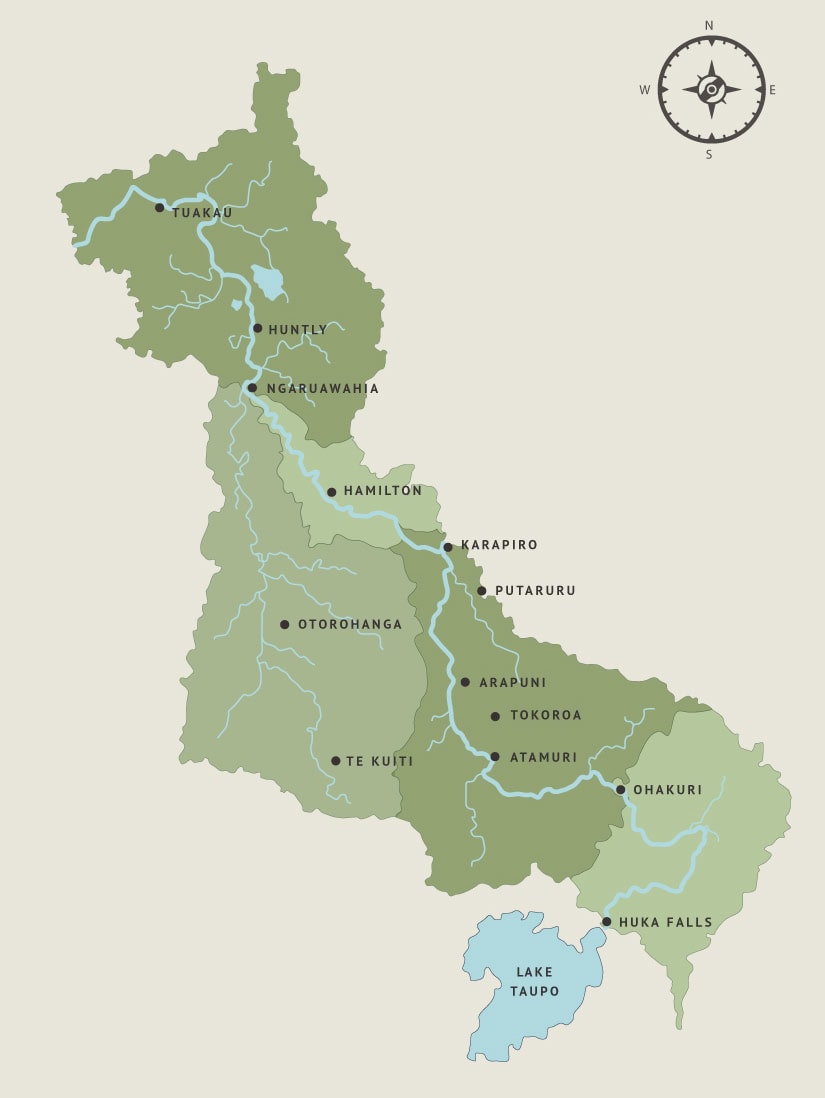
Shallow riverine lakes have algal blooms, very poor clarity, pest fish, have lost submerged plants, and kai species are degraded. Rehabilitation plans initiated.
1 of 4Lake Rotoroa’s ecological integrity and water quality have degraded.
2 of 4
The water clarity degrades swimming all year, but bug-level safe in the bathing season; diverse native fish (whitebait & eel fishing), but pest fish are prevalent; extensive drainage and flood control degrade ecological integrity; large wetlands present.
1 of 5 WaipāWater quality and clarity are unsafe for swimming in the mainstem and many tributaries; many lakes have good access and riparian vegetation but low water quality; diverse kai species in tributaries.
2 of 5 Mid WaikatoWater quality is safe for swimming only in the mainstem in bathing season; macroinvertebrate indicators reflect degraded conditions; good access and signage on mainstem and lake, efforts underway to improve fish passage.
3 of 5 Ohakuri To KarapiroWater quality is safe for swimming in the mainstem but not in most tributaries; six hydrolakes with good access support recreation; cumulative effects of farm inputs are increasing; a high degree of groundwater allocation; eels are manually transferred from below Karapiro; a high level of riparian fencing on dairy farms.
4 of 5 Huka To OhakuriWater quality is safe for swimming and good for trout fishing; geothermal inputs have contaminated lake sediments and some tributaries; there are many high-ecological-quality streams, but nutrient levels are poor; high level of riparian fencing on dairy farms; Ngahewa has degraded water quality.
5 of 5