Invasive gold clam found beyond Waikato region
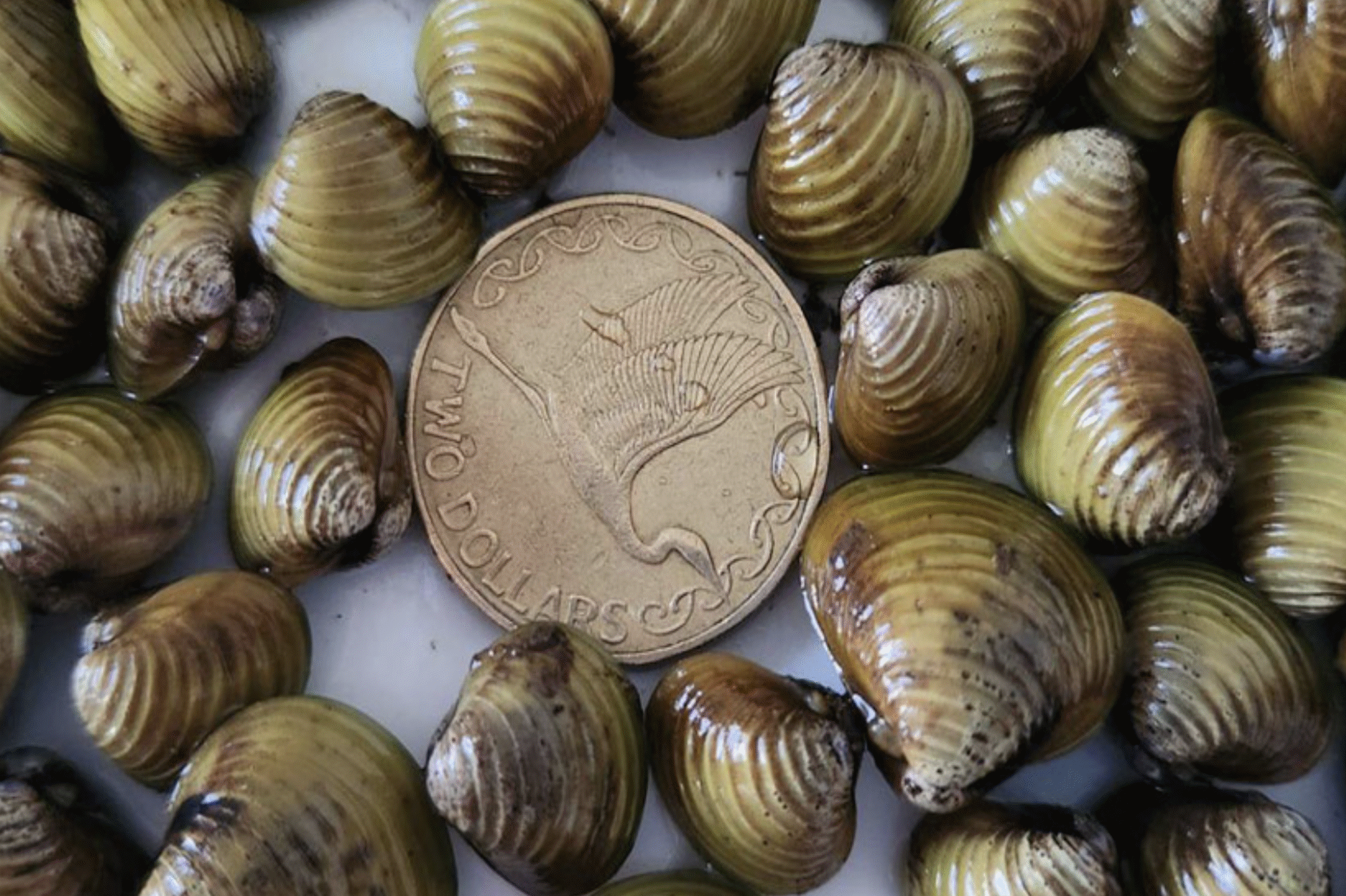
Lake Rotomanu in Taranaki has been closed to the public after the discovery of the invasive freshwater clam Corbicula fluminea, also known as the gold clam.
Waikato River Authority Chief Executive Antoine Coffin says the clam’s detection outside the Waikato region is a stark reminder for everyone enjoying our waterways to do their part in stopping the spread. “We urge boaties and whitebaiters to check, clean and dry everything that has been in contact with the water before moving between waterways.”
First discovered by chance in 2023 by freshwater ecologists stopping for lunch at Bob’s Landing on Lake Karāpiro, this fast-breeding shellfish can have long-term impacts on both recreation and the environment.
Native to Southeast Asia, it remains unclear how the gold clam arrived in Aotearoa. Overseas, the species has overrun waterways in North America and Europe, clogging irrigation, water treatment and power plant systems, and disrupting native ecosystems. Once established, it has never been eradicated.
Biosecurity New Zealand’s response plan focuses on containing gold clams to known locations, reducing their impact where possible, and developing tools to support these efforts.
“It’s disappointing to hear the news of the spread outside our region, and we support the New Plymouth District Council’s decision to close Lake Rotomanu to motorised boats,” Antoine says.
“Biosecurity NZ has managed to contain the pest for two years in the Waikato. We hope lessons learned from the mahi in our rohe help Taranaki get on top of this issue.”
If you spot suspected gold clams, take a photo and note the location before reporting it to MPI by: · freephone 0800 809 966 · or complete the online form at report.mpi.govt.nz