Climate Change Wānanga Highlights Innovation and Collaboration
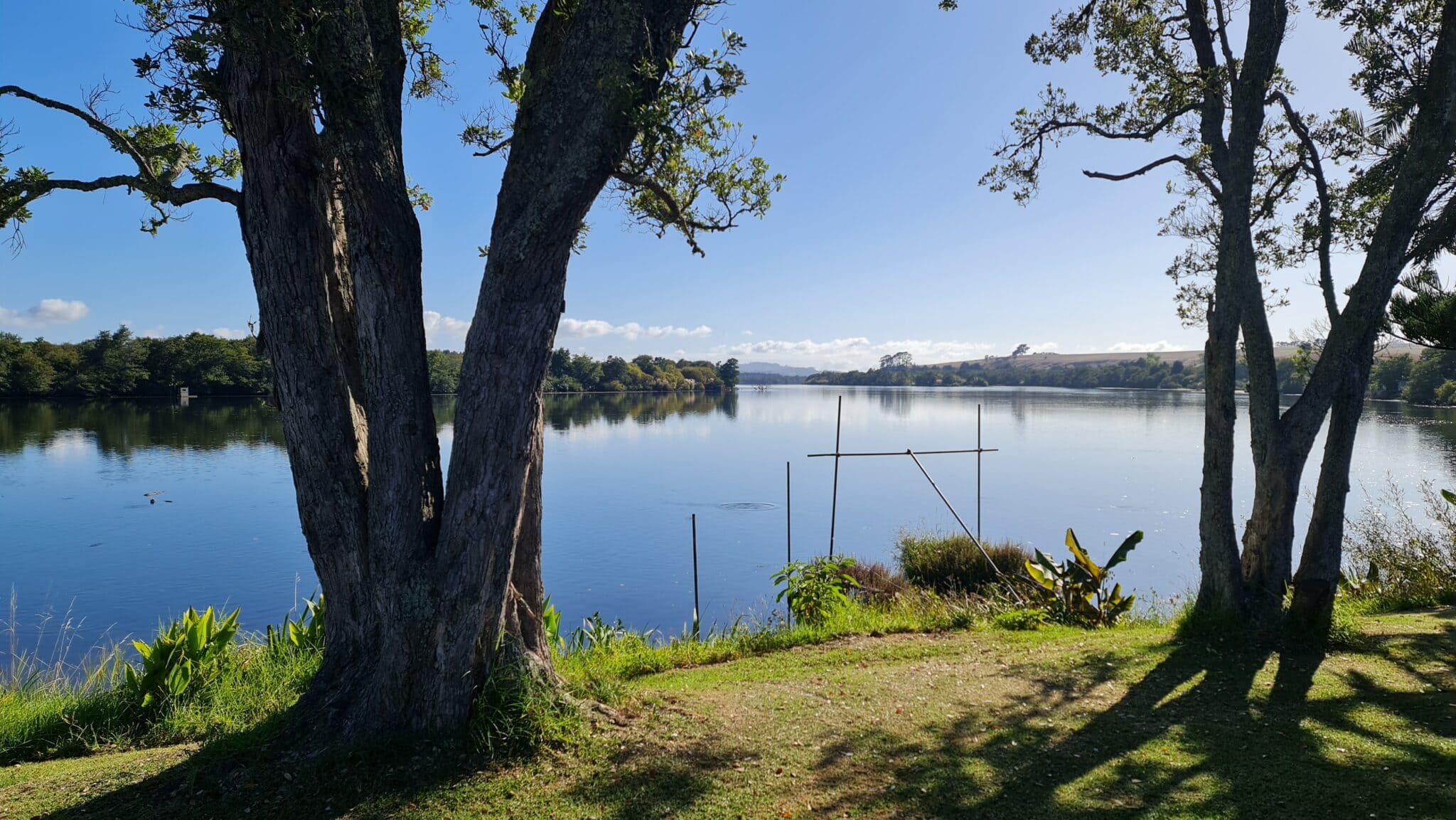
A Climate Change wānanga, held at Tauranganui Marae – located along the lower reaches of the Waikato River near Port Waikato – provided an overview of climate change impacts for the Waikato, bringing together a wide range of experts, community groups, and agencies.
Hosted by Cherie van Schravendijk-Goodman and Rangi Mahuta, the 15 March event attracted about 45 participants and featured a range of stalls and guest speakers. WRA representatives Stu Muir, Antoine Coffin, Michelle Hodges, and Tuti Cooper attended to support the kōrero and listen to the latest research.
Throughout the day, four expert speakers shared research findings and innovative projects. Scott Stephens from NIWA delivered two key presentations, the first focusing on climate change impacts in the Waikato over the coming century. He described a highly modified environment facing challenges such as flooding, salinity, temperature change, infrastructure vulnerability, and community resilience, highlighting choices ahead for the region.
Scott also introduced the concept of paludiculture – productive land use of wet and rewetted peatlands – as a strategy to reduce CO₂ emissions and land subsidence. His second presentation centred on sea-level rise and its consequences for freshwater species, food sources, flood protection, and biodiversity. NIWA’s work on gamifying threats and thresholds to better engage communities was also discussed, alongside the Future Coasts Aotearoa programme, a five-year research initiative on coastal lowlands.
Other presentations included James Brasington from the Waterways Centre at the University of Canterbury, who introduced an innovative LIDAR and sonar-based technology to map riverbeds, enhancing knowledge of river environments. Justin Connolly of Deliberate demonstrated how causal diagrams can be used to foster community-driven problem-solving around climate issues without large upfront costs or lengthy processes.
Closing the day, Cherie van Schravendijk-Goodman shared progress from her doctorate research, which is rebuilding an understanding of the morphology and ecology of the lower Waikato River using both scientific methods and mātauranga Māori. Her work aims to strengthen resilience and inform responses to climate change, weaving together traditional knowledge and modern science for the future well-being of the awa.
Stalls from organisations such as the Department of Conservation, Waikato River Authority, Waikato District Council, Ngāti Tamaoho, NIWA, Huakina Development Trust, and Swamp Frog showcased their research and restoration efforts. A highlight for many was seeing and hearing the mullet jumping in the river, a reminder of the life of the river environment the participants are working hard to protect.