“What will our mokopuna inherit from the decisions we make today?”
That was the challenge Hon. Nanaia Mahuta put to the room at the EDS Conference on 25 June, opening her address by saying that building a resilient future requires us to stand on firm ground rather than “the shifting sands of party politics.”
She built her case around three settlements that treat the environment and te ao Māori as inseparable rather than competing interests. Te Urewera Act, she noted, protects Te Urewera for its own intrinsic worth, with the Crown relinquishing ownership so that decisions serve the interests of the whenua itself. The Te Awa Tupua Act goes further again, recognising the Whanganui River as a single living entity, with Te Pou Tupua appointed as its guardians and voice.
What both share with the Waikato River settlement, she said, is that their legislation recognises “the direct link between the health of those ecosystems and the health of the people.”
On the Waikato model specifically, Mahuta described Te Ture Whaimana as sitting ahead of all other planning documents under the Resource Management Act, giving it primacy across an 11,000 square kilometre catchment that, in her words, no single guardian body could replicate alone. Governance is instead distributed through the Waikato River Authority, with equal Crown and iwi representation drawn from across the awa.
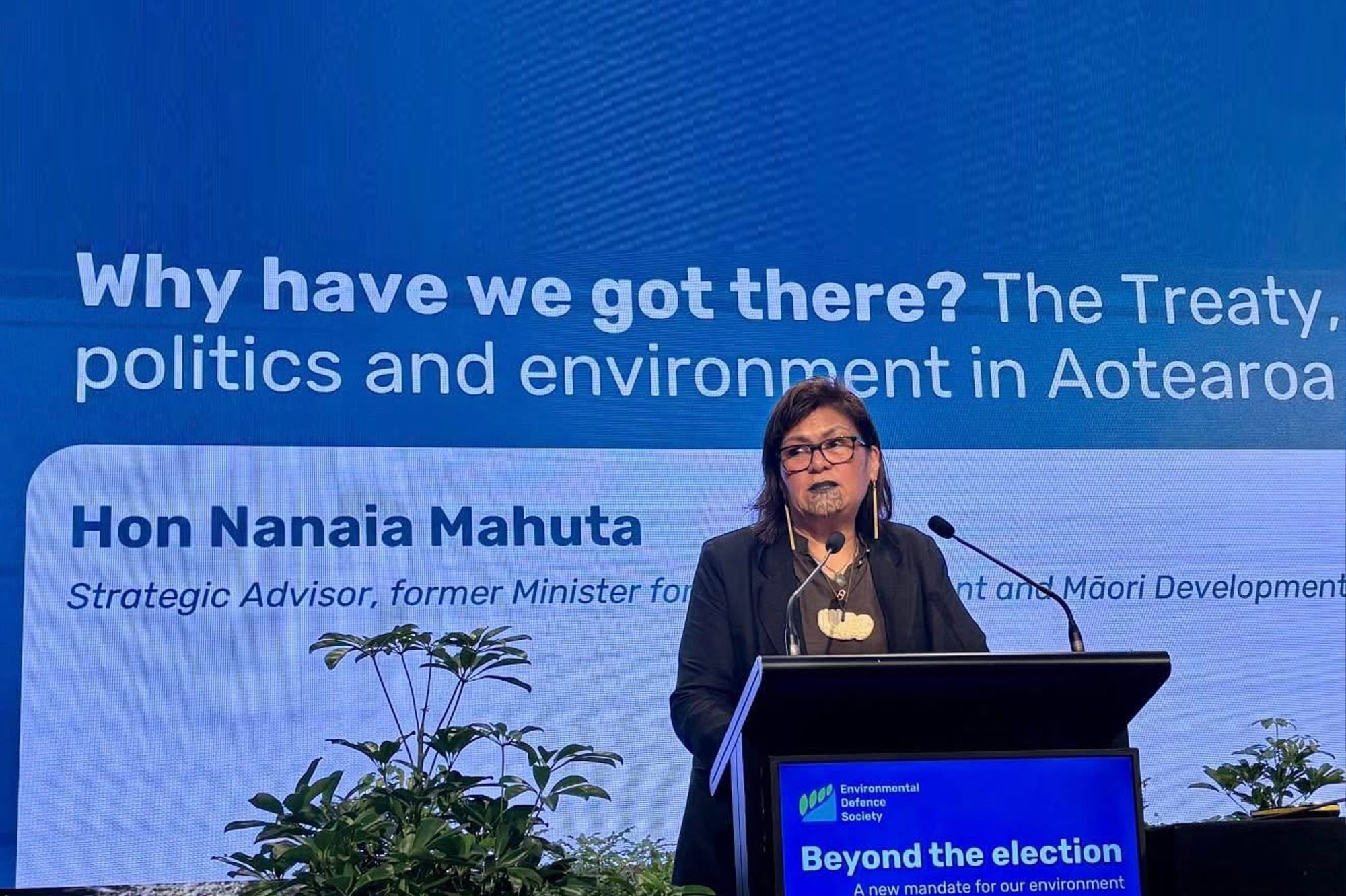
She traced the Authority’s record since 2010, granting funds for restoration work, and outcomes she described as a work in progress, with water quality and nitrate levels tracked alongside cultural indicators. What stood out to her most, she said, was something close to home: young people in communities like her own beginning to see their future in looking after the whenua and the water.
On the framework’s staying power, she pointed to a recent test:
“Te Ture Whaimana’s durability was reaffirmed just this month when the Environment Court upheld Plan Change One.”
River iwi, she said, had described that decision as a foundational framework for responding to the cumulative pressures on the catchment, one that offers a clear pathway to restoring the awa’s health for present and future generations.
Mahuta closed by sharing the tongikura of Kiingi Taawhiao: Maku ano e hanga toku nei whare, ko nga pou o roto he mahoe, he patete, ko te tahuhu he hinau.”
“I shall fashion my own house. The posts within will be mahoe and patete, the ridgepole hinau.”
It’s a saying tied to Taawhiao’s insistence that Waikato build its own future from what it had: humble materials fashioned into something enduring. Mahuta drew the same line through to Te Ture Whaimana: restoring the river is not a task for any one person or organisation to hand down from above. It is a collective undertaking, one that depends on all of us sustaining the vision and taking the practical steps needed so the generation we bring into the world can carry it further than we did.